Commercial Air Source Heat Pump Servicing
September 8, 2026
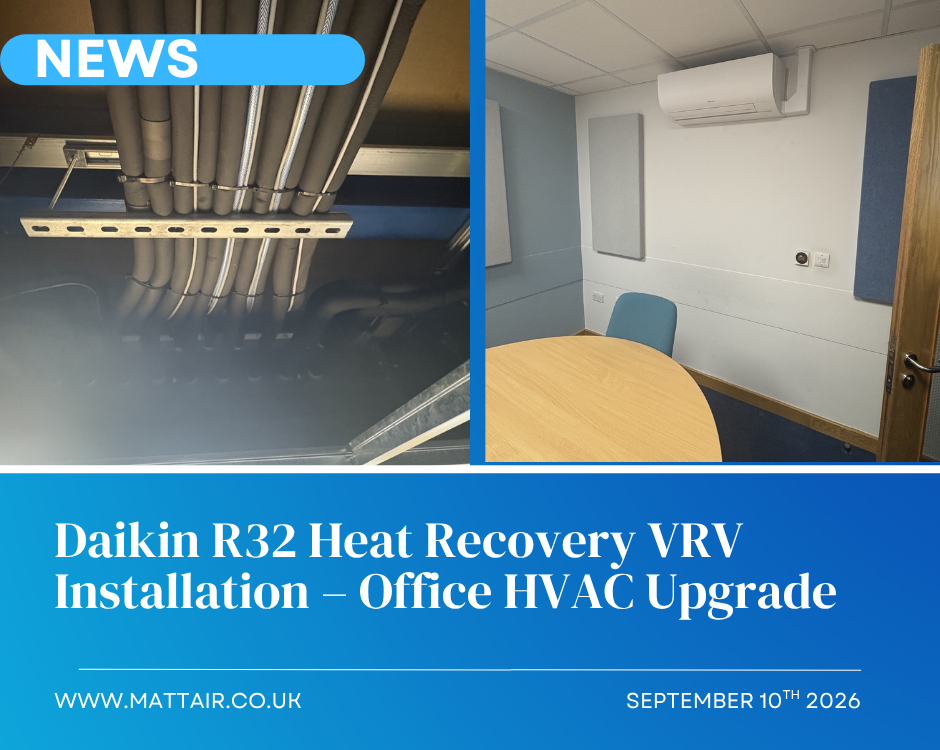
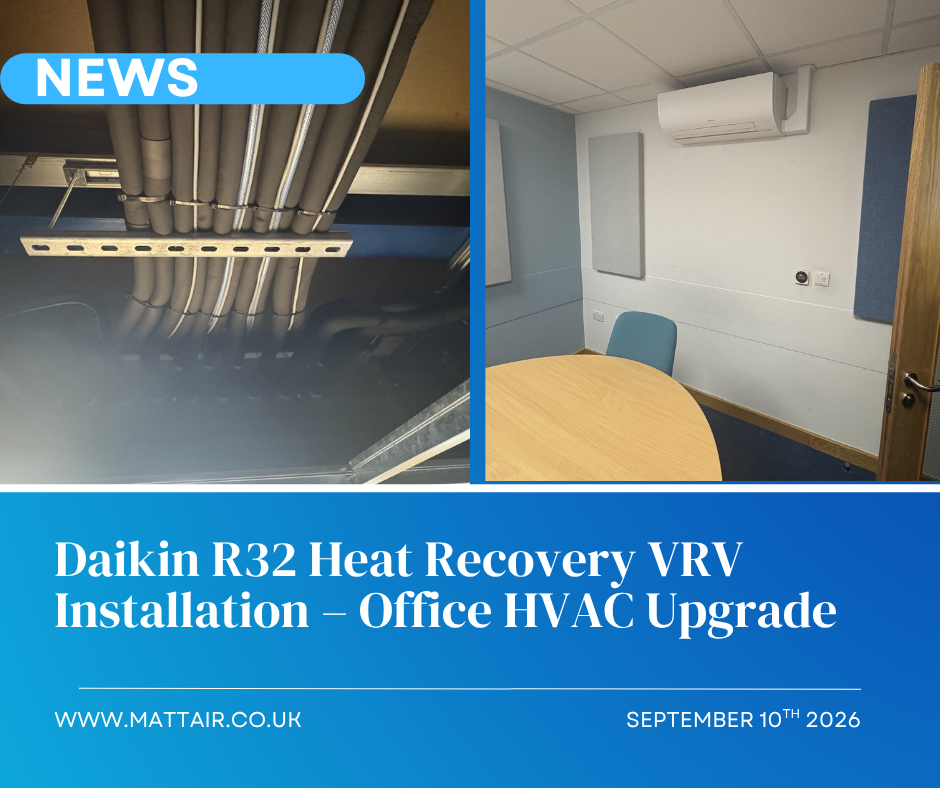
Daikin R32 Heat Recovery VRV Installation – Office HVAC Upgrade
September 10, 20267 Signs Your Commercial Air Conditioning System Needs Attention
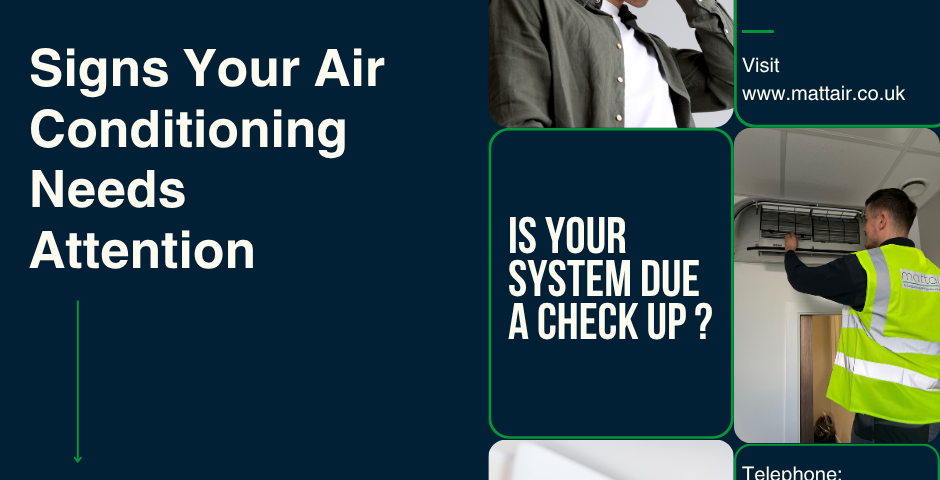
Is your commercial air conditioning system performing as it should? Recognising the early warning signs of a problem can help prevent unexpected breakdowns, reduce disruption, and keep your building comfortable for everyone who uses it.
In commercial buildings, air conditioning plays an important role in maintaining a comfortable and productive environment for employees, customers, and visitors. When a system begins to underperform, the effects can extend beyond temperature control, potentially leading to increased energy consumption, occupant complaints, and costly repairs.
For Facilities Management teams and building owners, identifying issues early is an important part of maintaining reliable building services. Here are seven common signs that your commercial air conditioning system may need professional attention.
1. Reduced or Inconsistent Airflow
Weak airflow from indoor units is often one of the first indications that an air conditioning system is not operating effectively. You may notice that certain areas receive less air than usual or that airflow varies between units.
Blocked filters, airflow restrictions, or other system issues may be responsible. If left unresolved, reduced airflow can affect comfort and place additional strain on equipment. A professional inspection can help identify the cause and restore effective operation.
2. Inconsistent Temperatures Across the Building
Are some rooms too warm while others are too cold? Uneven temperatures can be frustrating for building occupants and may indicate that your air conditioning system is struggling to maintain the required conditions.
Temperature inconsistencies can arise from a range of factors, including airflow issues, control settings, or faults within the system. If adjustments to the controls do not resolve the problem, it may be time to arrange a service visit.
3. Unusual Noises
Commercial air conditioning systems should generally operate without excessive or unfamiliar noise. Rattling, buzzing, grinding, or other unusual sounds may indicate that components require inspection.
While some operational noise is normal, a noticeable change should not be ignored. Arranging an inspection promptly can help identify potential faults before they develop into more significant mechanical problems.
4. Unexpected Increases in Energy Consumption
If your building’s energy consumption has increased without an obvious explanation, your air conditioning system may be contributing to the change.
Equipment that is not operating efficiently may need to work harder to maintain the desired temperature. Dirty filters, neglected maintenance, and system faults can all affect performance. Regular servicing helps ensure equipment is operating as efficiently as possible and can support better energy management across your building.
5. Unpleasant or Musty Odours
Unusual smells coming from air conditioning units should be investigated. Musty odours may indicate that cleaning or maintenance is required, while other unfamiliar smells could point to issues that need further assessment.
Maintaining clean and well-serviced equipment is an important part of supporting a comfortable indoor environment. If an odour persists, a qualified engineer can investigate the source and recommend the appropriate action.
6. Water Leaks or Excessive Condensation
Visible water leaks, dripping indoor units, or unusual moisture around air conditioning equipment are signs that something may not be functioning correctly.
Potential causes can include drainage issues, blockages, or other system faults. Water leaks should be investigated promptly to help prevent damage to ceilings, walls, flooring, and surrounding equipment, as well as to identify and resolve the underlying problem.
7. Frequent Faults or Breakdowns
Occasional faults can occur with any mechanical system, but repeated breakdowns or frequent engineer callouts may indicate that a more thorough assessment is required.
Rather than continually addressing individual symptoms, it may be beneficial to review the overall condition of the equipment, its maintenance history, and whether the current maintenance arrangements are meeting the needs of the building.
A proactive approach can help identify recurring issues and support more reliable long-term operation.
Why Planned Preventative Maintenance Matters
Regular maintenance is one of the most effective ways to keep commercial HVAC equipment operating reliably and reduce the risk of unexpected downtime.
Planned preventative maintenance allows engineers to inspect, clean, and service equipment at appropriate intervals, helping to identify potential issues before they become more serious. It can also support efficient operation, extend the useful life of equipment, and help Facilities Management teams plan maintenance around building requirements.
For busy commercial environments, proactive maintenance can make a significant difference in minimising disruption and maintaining consistent comfort.
How Mattair Can Help
At Mattair, we support commercial customers and Facilities Management companies with planned preventative maintenance, servicing, and reactive air conditioning repairs.
Our experienced engineers work to identify faults, restore system performance, and help minimise disruption to building operations. Whether you require routine maintenance or assistance with an air conditioning system that is no longer performing as it should, our team can provide professional support tailored to your building’s requirements.
Is your commercial air conditioning system showing any of these warning signs?
Contact Mattair on 01246 414922 to discuss how our team can help, or visit www.mattair.co.uk for more information about our commercial air conditioning and HVAC services.